SPOTTING FAKES AND REPRODUCTION PARTS
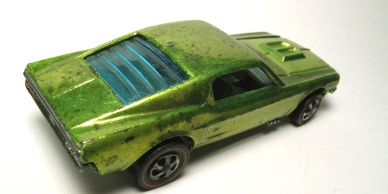
Let’s start with spotting fakes. Unfortunately there is no foolproof method at detecting a fake or repainted casting. And because there are those that are meant to be passed off as an original or as of a very rare casting, it can be exceedingly difficult to identify such fakes. There are however several things that can aid you in discovering these undesirables and ensure that what you are looking at is indeed the real deal or not.
In the easiest of cases you can spot a fake or repainted car right away simply because not all castings came in all colors. For instance, Mattel never produced the Custom Camaro in magenta. So, if one were seen, it absolutely would be a fake. Because each casting through out this guide is listed by color, knowing if a particular casting came in a certain color is quite simple.
If at first glance, second or even third, a color just doesn’t look right, chances are its not. Then it really becomes apparent how wrong the color is when you compare it to an original. There may also come a time when looking a car over you notice that the paint job is just too good. The finish may appear too smooth as if the body had been meticulously sanded down and polished before it was painted. Or, the paint appears too glossy which could indicate there may be a clear coat applied which is something Mattel never used on Spectraflame cars. These are definite red flags and are indications of a fake or repainted casting.
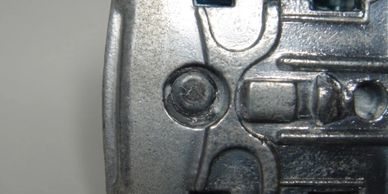
During production, Mattel had a specific process in which to fasten the base and body together. This was accomplished by spinning down metal posts that protruded from the body and often times the metal motors through corresponding holes in the base to fasten both together. Through this spinning process, distinct swirl marks were left on the button head of the post spin. Early production gave way to mushroom shaped post spin heads while later production as the process was refined, produced a more flat post head. These swirl patterns and post spin head shapes are very distinctive cues of true, un-tampered with castings. In fact, this same process is still used today. So, instinctively you would attempt to discover a fake by turning the car over and examine the post spins. Now, should you turn a car over and instead of seeing post spin heads you see glue or epoxy, stop right there, it’s a definite fake. However, if the post spin heads are aged and have a swirl pattern on them they are more then likely legitimate. If the post spin heads are flat without a swirl pattern, look too new, or don’t match the age of the base in terms of tarnish, this could be an indication that the post heads have been replaced and the car probably has been repainted or tampered with in some way. It is important to note that there are reproduction rivets out there that try to resemble the original spin head both in shape, size and include swirl marks. This tends to make it more challenging to spot a fake but these reproduction rivets tend to look too new or don’t appear flush with the base which at times gives them away. So, now how can you tell if the post spins are real or fake? It may sound crazy, but, one method is to take a magnet to the post spin. If the magnet is not attracted to the metal, then the post spins are original. If there is an attraction, then the post spins are not original.
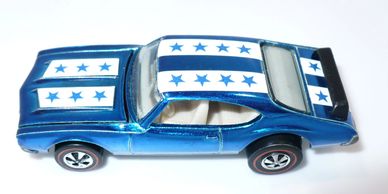
What's more, real good fakes that are meant to fool even the experts are done in such a fashion that you need to look through the wheel wells to examine the area where the base and body meet. Because this particular process entails taking two cars of the same casting and drilling through the top of one to preserve the base and then drilling through the base of the other to preserve the body, you are looking for signs of epoxy or another bonding agent that is used to bond the base and body together. By preserving the base, you have “legitimate” post spins and when put together with the preserved body that has been repainted, you have a very convincing fake with little to no signs of tampering. A jeweler’s loop makes for an excellent tool when closely examining these areas.
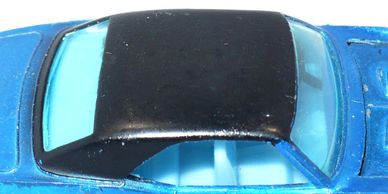
Frequently you will come across a casting that was produced with a matte black roof. The majority of course are legitimate but there was a period in time when fake black roofs were running rampant, mainly on the Spoilers series cars. A good way to detect a fake black roof is to again use a jeweler’s loop and examine the windows and area around the black roof itself. If you see overspray especially on the windows, it is definitely a fake. Also, check for paint on the underside of the roof and edges along the inside of the window openings. An original black roof will not have paint in these areas as Mattel used a template to mask off the area not to be painted black. The use of the template was not always precise so you may find a legitimate casting where the black roof maybe askew or there is the presence of overspray on the rear deck or cowl. Therefore take some extra time to examine any casting with a black roof and ask questions if you just aren’t sure.
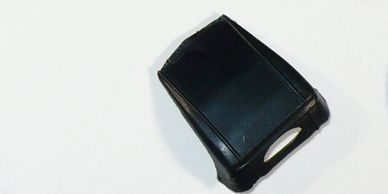
Now let’s take a look at reproduction parts. There are a number of reproduction parts out there ranging from interiors, windows, sticker and decal sheets, hoods and even wheels and engines. The true intent of these reproduction parts is to provide a source to complete a custom or refurbished casting. Alternatively, reproduction parts can provide a means of completing a casting that might otherwise be missing something. For example, a collector finds a very nice example of an Olds 442 but the rear wing is missing. The collector may acquire a reproduction wing if an original is not available to use in its place to complete the car for display. Unfortunately, there are some that will use reproduction parts to complete a casting and then intentionally misrepresent it and sell it as being completely original. Though times it is difficult to tell whether a part is original or reproduction, an honest seller should always disclose whether a reproduction part is used even if he is not entirely certain. As a buyer, you should try to educate yourself on those particular castings that might have a reproduction part so you know what to look for. Usually there are mold numbers or specific mold marks on the original parts but these can also be reproduced, making it even more difficult to identify a reproduction from an original. If in doubt, ask the seller questions and if you still remain uncertain, ask a fellow collector. Since identifying reproduction parts can be difficult unless you have an original to compare side by side, below are some examples of what to look for.
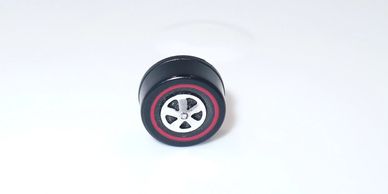
If a wheel looks too perfect, chances are it is not original. Reproduction wheels tend to be way too chrome looking and the redline itself tends to be far too glossy.

An original roof made for the Classic Cord is opaque when you hold it up to the light. When you hold up a reproduction roof to the light it tends to be translucent. Also, look for identification numbers found on the inside of the roof, most reproduction roofs do not have these numbers. A roof in any color other then black is definitely a reproduction, as Mattel only produced a black roof.
The original rear wing of the Olds 442 is pliable or soft where the reproduction wing is stiff and hard. There are also casting numbers on the underside of the wing however, some reproduction wings mimic this trait.
The original wings for the Mighty Maverick and Chaparral have a crease that allows the wing itself to bend up and down. A reproduction wing is solid or fixed and will not bend at all. In addition, the wing on the Mighty Maverick is part of the interior and folds upwards from where the body meets the base in the rear.
All original sticker and decal sheets were paper backed and will be die-cut. Most reproduction sheets will be made of die-cut vinyl. In some cases, reproduction sticker and decal sheets are not even die-cut leaving you to cut out the individual pieces.
Original water slide decals were made with a clear overcoat that runs beyond the colored decal itself creating a sort of clear boarder. This boarder is visible when they are on the backing sheet and also if they are applied. You may also notice a discoloration of this boarder due to age, which is normal, and a good sign of an original. Reproduction decals tend to not have this boarder and the overcoat stops at the edge of the colored decal.
Original surfboards have a unique tone, slightly dull, both for the yellow and orange color and the fins are thin when looking at them from the top. The reproduction surfboards usually have the wrong color tone, too bright, and the fin is thicker. Also, the original surfboards are softer and more pliable where the reproductions are rigid and stiff. There are mold marks in the form of small circles on the original surfboards that are usually a good indicator, however really good reproductions have started to mimic this feature.
The original boat for the Seasider was produced either white on orange or orange on white. While the reproduction boats mimic this, they have a thicker feel to them and the orange is usually too red. In addition, the original boats will have a patina due to age or through handling while the reproduction ones appear too new and glossy.
You can spot reproduction stripes found on Spoilers like the Heavy Chevy, Boss Hoss and Nitty Gritty Kitty by running your finger over the top. As you run your finger across the stripes you should not feel one stripe and then the other. Original stripes are a one piece decal where reproductions are usually separate. The same is true with the Club Kit cars. The black stripes are printed on silver foil, so you should only feel one decal as you run your finger across.
A fairly common reproduction part out in the wild happens to be the reproduction motor for the U.S. Beatnik Bandit and U.S. Python. The reproduction motor is very chrome-like and looks too new. In addition, reproductions have wavy ribs on the blower's sides and the back carburetors are fully slanted on one side.
Factory originals have straight ribs on the blowers and the back carburetors have a much slighter slope on one side.
Hopefully the information here has helped you become a little more aware of what to look out for regarding fake castings and reproduction parts. It is not everyday that one will come across a fake or a reproduction piece, but the more knowledge you gain over time by studying the originals you will know when you do come across that one car that just doesn’t look right.